
— philosophy
Most charter boats have a couple of stand-up paddleboards. Holoholo carries the full quiver — because when you find good wind in the Tuamotus, you want the right kite in your hand, not the closest kite in your hand.
— on board
The full inventory.
5m → 13m
Twintip
Kite foil
[sizes tbc]
[sizes tbc]
Included
2 boards
Full spares
On board
Full range
Full range
Dry-top
– the kite quiver
Every wind day, covered.
The Tuamotus deliver classic east-trade winds through the sailing season — typically 15–22 knots on a good afternoon, occasionally more, occasionally less. The quiver is provisioned so that whatever the wind does, someone on board has the right kite ready.
TYPICAL TRADE WIND RANGE · 15-22 KT ~ WIND RANGES APPROXIMATE · VARY BY RIDER & BOARD
The doubles matter. Two 9m, two 12m, two 13m — the sizes most likely to be flying on any given afternoon. No fighting over the right kite for the conditions; two riders can be on the same size at the same time.
— the conditions
Trade winds, warm water, empty lagoons.
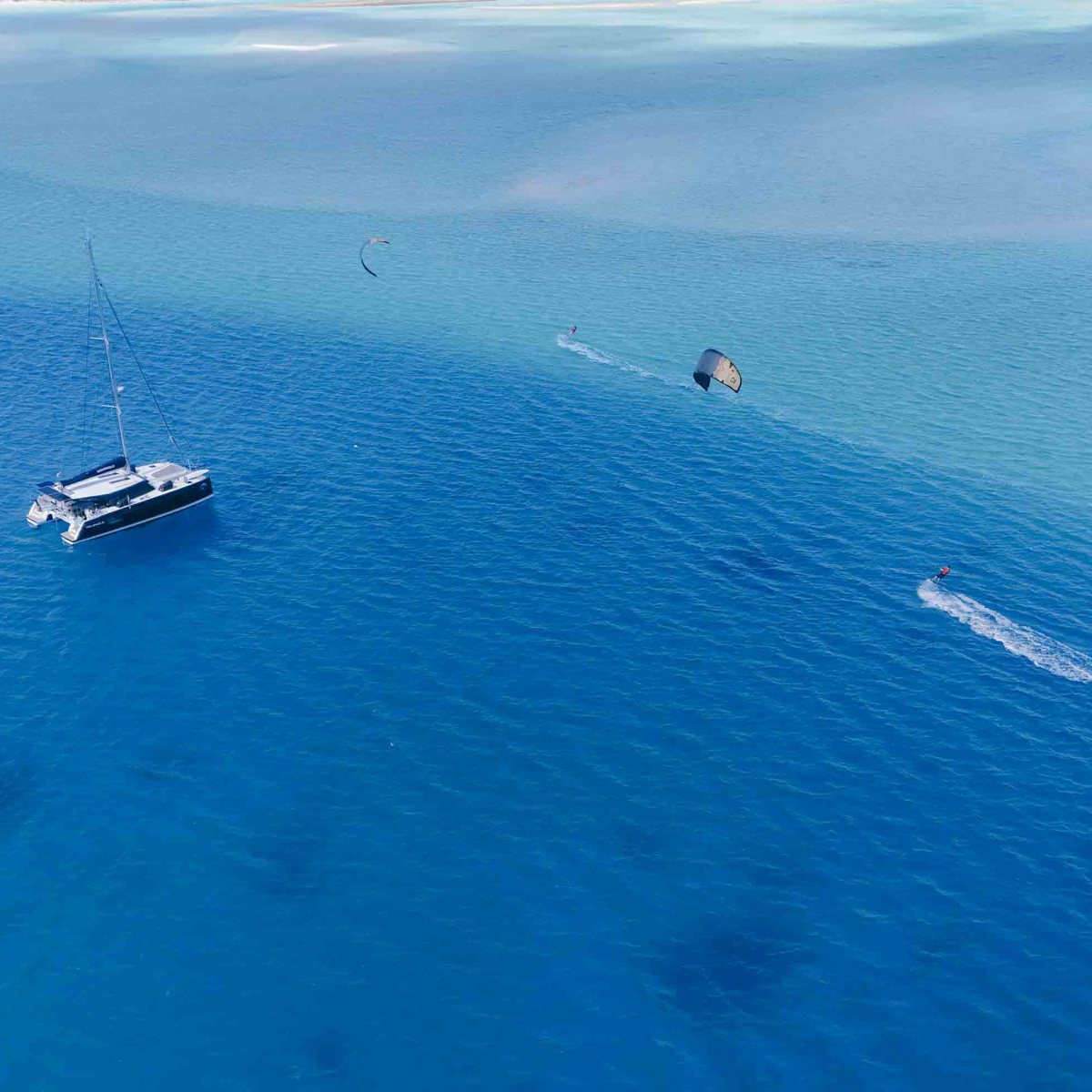
The sailing season runs May through October — the austral winter and the trade-wind season. Classic days deliver 15–22 knots from the east, warm water year-round, and vast, empty, glassy-turquoise lagoons behind the atolls’ outer reefs.
The Tuamotus advantage: anchoring inside an atoll gives you kilometers of protected, empty, uncrowded riding water — with the boat right there as your base.
Wind · 15 — 22 kt · Trades, from the east
Water · 27 — 29°C · Year – round warm
— before you book
What to know.
Bring your own?
Most riders leave their gear at home — the kite quiver especially is easier to fly than to fly with. If you’re particular about your board or harness, bring them. Otherwise use ours.
Skill level.
The quiver is set up for intermediate to advanced kite / wing riders. Absolute beginners can learn the basics on a paddleboard or foil trainer, but this isn’t a kite school — the emphasis is on riding, not teaching.
Instruction on request.
Not a kite school — but the crew rides, and can help you sort setup, launch technique, or a first foil session on the fly. For proper lessons, we can arrange a certified instructor to join for part of the trip.
Safety first.
Every session runs from the boat or its tender — someone is always watching from Holoholo. Personal AIS beacons available for extended downwinders. Wind forecasts read every morning; sessions planned around them.
Diving separately.
Certified dives are arranged through trusted local operators in Fakarava and neighboring atolls — not run from the boat, for safety and licensing reasons. Snorkel gear for the whole group is always aboard.
Ready to ride?